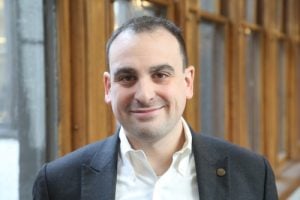
In The Washington Post, NYU adjunct professor Max Raskin advances the entirely defensible claim that the bar exam is a cartel instrument designed to keep prices high, outsiders out, and the whole profession wrapped in the same warm, self-satisfied delusion that making future securities lawyers memorize the Rules of Evidence has ever, even once, identified who will be a competent lawyer.
Fair enough. Totally agree on that front. The bar exam is a flaming sack of Scantron-bubbled garbage.
But the headline and hook? “How the bar exam failed Kim Kardashian” is just… no. No, we’re not doing this. We’re not hoisting Kim Kardashian upon the cross of professional licensure reform. The only good argument FOR the bar exam is Kim Kardashian.
Unfortunately, an essay on the futility of the bar exam and the desperate need for states to develop alternatives to a generalist memory test for a profession of specialists probably doesn’t grab the attention of the Washington Post and certainly not the attention of the public at large. But with one of the most — if inexplicably so — famous people in the world grafted onto the polemic, it stands a chance of reaching a broader audience. And so this piece is framed around Kardashian’s quixotic and confusing quest for esquireship. But not all publicity is good publicity and tying the fight against the bar exam to Kim Kardashian does more harm than good.
She’s not Our Lady of Perpetuities, she’s a reality star without an undergrad degree — let alone a law degree — trying to shortcut into a law license to perform admittedly good work that she already does without being a lawyer anyway! Kardashian’s work supporting challenges to wrongful convictions and relief from excessive sentences doesn’t need another lawyer, it needs a billionaire to bankroll a bunch of lawyers.
But she does not make a sympathetic figure for bar reform. If anything, the public sees a billionaire dilettante cutting corners. Say what you will about Elle Woods, but she actually went to Harvard. This isn’t meant to diminish the work that Kardashian’s put into this effort. Her “reading the law” pathway absolutely involves real work, and is a time-honored pathway harkening back to the days before law schools metastasized into debt factories. But we’re trying to persuade the public that the bar exam fails to effectively vet future lawyers and “it kept out that rich woman from TV who never went to college” strikes most people as the bar exam doing its job.
The fundamental problem with Raskin’s broadside against the bar exam because he goes beyond bashing the bar exam as a bad test to questioning the need for professional licensing at all. Kardashian is a flawed hero for bar exam reform, but fits into an argument for a world of no licensing at all.
The bar exam, the Law School Admission Test and law school itself are the price you pay for joining a government-protected legal guild — no different from taxi medallions or liquor licenses. It is essentially illegal to represent someone else in court without passing this test, which is an exception to the general rule that people should be allowed to hire whomever they want without the government’s permission.
No, being a lawyer is not the same as running a bar. An incompetent lawyer leaves clients in financial ruin or prison, while an incompetent bartender leaves clients with a subpar martini. The free market can sort out bad bartenders over time, but it doesn’t do much for the guy serving 25 to life while the rest of the market catches up on the lawyer’s Yelp reviews. Many jobs don’t require expensive licensing. Attorney is not one of them.
The Uber-fication of legal gives real “libertarian startup pitch deck” energy. And I’m still trying to figure out how justice doesn’t end in truly vicious surge pricing in this model.
Many empirical studies question the effectiveness of the bar exam in predicting lawyerly prowess, but this should be settled by a free market. We don’t make auto mechanics or electricians go to school for an additional three years, even though their professions can cause much more physical harm. We rely on credentials, social signaling, reviews and other market mechanisms for determining quality.
But… we do. We don’t have an “additional three years” of school for either of those jobs, but we do have schools for them. We’ve had a national level push toward trade schools since the tail end of the Obama administration. There are also accepted licensing procedures for both. Auto mechanics are certified through an industry test, and even though the government isn’t running that test, many jurisdictions require passage of the industry test to perform key tasks as a mechanic. Electricians, on the other hand, absolutely do get state licenses. Every state requires some sort of electrician certification.
The best defense of this system is that while it is not necessary to memorize the arcane rule against perpetuities to be a competent lawyer because you can always use Google, the temperament of the person who has the sitzfleisch to study for these exams is the kind of person who makes an effective lawyer.
Hopefully lawyers are not doing critical legal research with Google. But, yes, the bar exam expects applicants to answer doctrinal questions about areas of law they don’t specialize in from snap memory, which in real world is what we would call “malpractice.” It is a goofy stand in for “the kind of person who makes an effective lawyer.” You know what might be a better stand in for the kind of person with the temperament to engage in grueling legal study? A LAW SCHOOL.
This is why diploma privilege, coupled with more rigorous standards for law schools to actually turn out graduates capable of doing the job — as opposed to collecting their tuition dollars and wishing them luck on the bar exam — makes for the best licensing model. You know, sort of like the one Wisconsin figured out ages ago.
Which is, again, why the best defense of the bar exam is… Kim Kardashian. The only defensible purpose of an additional written test of legal knowledge is to vet someone who decided to skip out on law school. This test doesn’t have to be the current bar exam. In fact, it should be something more closely resembling Utah’s new proposed written test, which focuses on skills and aims to be something that a competent, currently practicing lawyer could pass without any studying. If we’re testing minimum competence, then existing practitioners should by default be able to pass with ease or there’s something even more desperately wrong.
Lawyers are not doctors, so more experimentation in the legal profession can be tolerated. Lawyers are not constantly making life-or-death decisions, and when they do, there are procedures to ensure that counsel is competent. Run-of-the-mill contract review and regulatory filings, however, don’t warrant a licensure scheme.
Seriously? Yes, lawyers are not doctors, but this is a country that convicts people of murder when their lawyer falls asleep in court. So pardon us for being a tad skeptical of the “procedures to ensure that counsel is competent.” Obviously, law school and the bar exam didn’t protect that client, but it underscores how something needs to be in place before opening the door to every rando because a “kill them all and let God sort them out” approach to the market will, in fact, kill a lot of people while the market sorts it out. And that goes for victims of companies concealing their work with fraudulent regulatory filings as much as for wrongfully convicted defendants.
This is especially true in light of advances in artificial intelligence.
Stop.
AI systems already draft wills, nondisclosure agreements, term sheets, employment contracts and regulatory memos at associate-level quality.
No, they don’t.
There are those who point to the occasional lawyer who doesn’t check hallucinated citations and embarrasses himself in court, but these are exceptions. The vast majority of lawyers who use AI don’t want to admit it for the same reason doctors don’t want to admit to Googling symptoms, so there is a negative selection bias where stories of federal judges sloppily using AI catch more attention than routine use of the tool.
This, however, is true. AI is not doing associate level work unless you happen to work with really terrible associates. AI drafts documents that look like associate-level work. Which, in its defense, is still extremely useful and AI can do valuable work when drafting based off a well-curated knowledge base. Coupled with a competent attorney, AI can make the start-to-finish legal workflow much faster. Lawyers (or judges) who don’t check AI are the real problem, not the technology itself. But don’t let the technology totally off the hook. The acceleration of the workflow creates the conditions for disaster, compressing those moments of pause where lawyers engage in the iterative and collaborative processes that refine (and sometimes completely reorient) the work.
Someone competent needs to be on the other end of this or it’s just an express lane to legal slop. The public should feel confident that the smooth talker they’ve hired will be that competent thinker. If anything, the expansion of legal AI makes the need for an agreed upon certification process more dire because work product is going to get more homogenized with everyone using the same LLMs and human editing is going to be the only differentiator.
Also, doesn’t this whole AI argument cut the opposite direction? If one assumes that AI is a magic box that can do most legal work, the cost of legal work would fall anyway, regardless of its guild-like structure. In this hypothetical world, lawyers are churning out drafts with a fraction of the human staff. Flooding the market with more untrained attorneys lacks the price-busting power it would have in a pre-AI world.
One of the most nefarious forms of protectionism is the limit on nonlawyers being partners in law firms. This rule prevents specialization, which is the cornerstone of economic order. Why would someone think that a lawyer who has trained in a narrow field would be good at firm operations or marketing or hiring? In most other industries, chief technology officers deal with tech, chief operation officers deal with operations and hiring is with human resources. But in law firms, essentially all the ultimate decision-makers must be lawyers. Kim Kardashian could surely run a more efficient marketing department than a white-shoe firm.
Law firms already hire chief technology officers. There’s nothing about the limit on non-lawyer ownership that prevents building out a non-lawyer C-Suite. Whether it’s a good idea to let private equity funds run law firms or not is a debate, but it’s not what prevents firms from hiring specialist officers.
These rules are marketed as protecting justice when they really protect incumbents. Over the past decade, legal costs have risen by about twice the rate of inflation, while technology should have driven costs down.
True, though lawyers are just catching up after running below inflation for years. We ideally want legal costs lower and more accessible while lawyers make their nut on technology assisted volume, but we also need some way to assure the public — before they end up in prison — that the lawyer they’re talking to is competent. The bar exam is a horrible mechanism for this. Law school is better.
Which brings us back to Kim Kardashian. The bar exam isn’t failing Kim Kardashian. It’s failing the law school graduates who more than meet any reasonable standard of “minimum competence” because the test is administered as a quantity control mechanism for the profession. But Kardashian isn’t a law school graduate who completed a course of study at an accredited institution. She’s the exact reason the public thinks a test like the bar exam is necessary in the first place.
Kill the bar exam tomorrow, replace it with statewide supervised-practice pathways, tighten accreditation oversight, and give diploma privilege to schools that produce actually competent graduates. Then reserve the exam — a better one, not the dumpster fire we have now — for the narrow slice of candidates not covered by those systems.
We don’t need to abolish a written exam because it was unfair to Kim Kardashian. We need to abolish the exam because it’s unfair to everyone else. But we absolutely need some kind of licensing.
Joe Patrice is a senior editor at Above the Law and co-host of Thinking Like A Lawyer. Feel free to email any tips, questions, or comments. Follow him on Twitter or Bluesky if you’re interested in law, politics, and a healthy dose of college sports news. Joe also serves as a Managing Director at RPN Executive Search.
The post Actually, Kim Kardashian Is The Best Argument FOR The Bar Exam appeared first on Above the Law.