
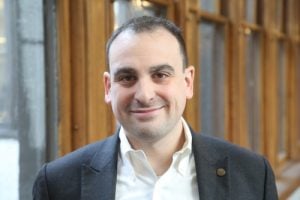
Back in July, a University of Kentucky spokesperson offered a theory of why the school’s investigation of law professor Ramsi Woodcock had dragged on so long: if Woodcock “had spent his time responding to the serious allegations regarding his conduct in a timely manner, rather than filing frivolous lawsuits without merit, his case would have long since been resolved.”
It still has not been resolved, but according to the appellate court, that’s the university’s problem.
A unanimous Sixth Circuit panel reversed the district court’s decision to abstain under Younger v. Harris and sent Woodcock’s First Amendment suit back for consideration of his preliminary injunction motion. Judge Richard Griffin wrote for a panel that also included Ronald Lee Gilman and Chad Readler — a Clinton appointee, a Bush appointee, and a Trump appointee.
The university argued that — as a public institution — its internal investigation counted as an ongoing state proceeding, barring a federal court from interfering. The panel gave that argument every advantage available, assuming for the sake of argument that a Title VI investigation into alleged violations of university policy “constitutes a civil enforcement proceeding akin to a criminal prosecution.” Even with this unduly gracious assumption, the school still lost:
The proceedings are not ongoing. On the contrary, the disciplinary proceedings against Woodcock remain in a preliminary, investigatory stage. There is no ongoing formal proceeding against Woodcock, nor has the University filed a formal complaint against him.
The opinion notes that, to be considered anything approximating a real proceeding for abstention purposes, the university’s own rules require a threshold finding, a formal hearing, an internal appeal, and then termination proceedings before the Board of Trustees — none of which has occurred. The school hasn’t even determined that Woodcock violated a policy. It issued notices and sent questionnaires while temporarily reassigning his duties.
It’s as though they want all the benefits of punishing the professor without actually putting anything in writing.
On August 25, 2025, the university told Woodcock it would “seek to complete the fact-gathering stage” within 60 to 90 calendar days. We’re now nine months past the outside estimate, and still supposedly in fact-gathering. Meanwhile the interim measure — reassignment to “100% professional development,” a status that the university stresses is not a suspension even though he cannot teach, advise students, attend faculty meetings, or enter the building — has now run for thirteen months with no expiration date.
Woodcock landed in this position after posting a petition calling for military action against Israel. As with a lot of conversations about foreign policy toward Israel, it’s a take that runs up against the line between an employee expressing an opinion about geopolitics protected by free speech principles, and that same employee contributing to a hostile environment for Jewish students. Context should matter in navigating those waters, but the school instead takes the blanket position, as directed by the state legislature last year, that criticism of Israeli policy generally constitutes antisemitism. Woodcock’s suit challenges imposed that definition.
It’s also hard to see this case independently of Woodcock’s other tussle with the university: his suit against the school over the hiring of former judge Gregory Van Tatenhove as the new law school dean. At the heart of that suit, Woodcock argues that the school’s own policies require candidates for the deanship to meet scholarly benchmarks that the long-time federal judge simply didn’t have. On top of that, a majority of the faculty reportedly objected to the hiring, which creates ABA accreditation problems for the school.
Assuming the ABA still accredits law schools, of course. But that’s a whole other conversation about the First Amendment and politically motivated government retaliation.
Earlier: Kentucky Law School’s Dean Fight Is A Dumpster Fire
Kentucky Law Professor Sues To Stop New Dean And Every Federal Judge Already Recused
Federal Judge Steps Up To Be Law School Dean
Joe Patrice is a senior editor at Above the Law and co-host of Thinking Like A Lawyer. Feel free to email any tips, questions, or comments. Follow him on Twitter or Bluesky if you’re interested in law, politics, and a healthy dose of college sports news.
The post Circuit Revives Kentucky Law Professor’s First Amendment Suit Over Israel Petition appeared first on Above the Law.